
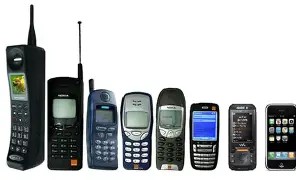
There are moments in history when a civilisation stands at a crossroads, though few recognise the significance of the moment until many years have passed. The changes are seldom announced by the sound of cannon fire or the collapse of governments. More often, they arrive quietly, disguised as progress, convenience and entertainment. By the time their true consequences become visible, they have already reshaped the character of a people.
We may be living through such a moment now.

Within the span of little more than a generation, the smartphone has become the most intimate possession in human history. It is the first object many of us reach for each morning and the last we surrender before sleep. It accompanies us through our triumphs and disappointments, our meals, our journeys, our conversations and our silences. No invention has ever occupied so much of our attention or exercised such quiet influence over the ordinary business of daily life.
Combined with the relentless expansion of social media, it has accomplished something extraordinary. It has connected billions of people across continents while, at the same time, placing at risk the very relationships upon which civilisation has always depended.
This is one of the great paradoxes of our age.
We have never possessed greater means of communication, yet genuine conversation appears to be diminishing. We have never been able to exchange information more rapidly, yet understanding often seems more elusive. We have never enjoyed greater access to one another, yet loneliness, anxiety and social isolation have become defining features of modern society.
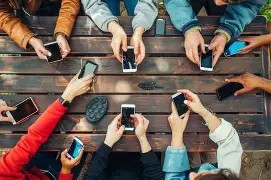
One cannot help but wonder whether, in our pursuit of connection, we have neglected communion.
For thousands of years the family has been humanity’s greatest institution. Long before there were governments, universities or corporations, there were families. It was within them that language was learned, values were formed, traditions preserved and wisdom handed patiently from one generation to the next.
The extended family, in particular, has always acted as the bridge between past and future. Grandparents carried living memories of earlier times. Parents interpreted the present. Children imagined tomorrow. Each generation moderated the excesses of the others, creating continuity through change.
Today that bridge is under strain.
Children increasingly look to strangers on screens before they look to their own elders. Parents compete not merely with schools or peer groups but with vast digital industries employing thousands of psychologists, engineers and behavioural scientists whose purpose is to command attention with extraordinary precision.
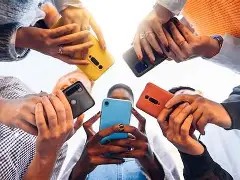
No mother or father, however devoted, should be expected to compete unaided against technologies deliberately designed to be irresistible.
The consequences are not always dramatic. They are quieter than that.
A family sits together in silence, each face illuminated not by conversation but by the pale glow of a separate screen. A grandparent tells a story while younger eyes drift towards a vibrating telephone. Friends gather without truly meeting. Neighbours live side by side for years yet know one another only through neighbourhood forums rather than shared experience.
These may seem small losses.
Civilisations, however, are not held together by grand occasions alone. They endure because of millions of ordinary moments in which trust is formed, affection is strengthened and understanding is patiently cultivated.
When those moments disappear, something precious disappears with them.
Meanwhile, the digital world rewards impulses that every successful civilisation has traditionally sought to restrain.
Patience yields to immediacy. +++ Reflection yields to reaction. +++ Wisdom yields to popularity. +++ Truth competes with spectacle. +++ Outrage becomes entertainment. +++ Division becomes profitable.
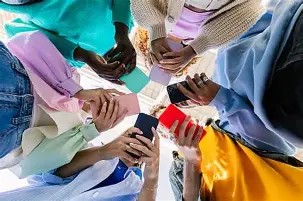
The algorithms governing so much of our public discourse possess neither conscience nor citizenship. They recognise no nation, no family, no moral tradition and no common good. They measure success by engagement, not by enlightenment; by attention captured, not by character formed.
A civilisation that entrusts its public square to such forces should not be surprised if public life becomes increasingly fragmented.
History offers repeated warnings.
The decline of great societies has rarely begun with military defeat alone. More often it has started when confidence in shared institutions weakened, when common purpose dissolved into competing factions, when immediate gratification displaced duty, and when private interests steadily eclipsed the obligations owed to family, neighbour and nation.
No historical comparison is ever exact, yet the lesson remains remarkably constant.
A society survives not because it is wealthy or technologically advanced, but because its people possess sufficient trust to cooperate, sufficient restraint to compromise and sufficient affection to care for one another despite their differences.
These virtues cannot be downloaded. +++ They cannot be automated. +++ They cannot be manufactured by artificial intelligence or purchased through technological innovation. +++ They must be learned, practised and passed faithfully from one generation to the next. +++ This is why our present course deserves serious reflection.
The question before us is not whether smartphones should exist. They have transformed medicine, education, science and commerce beyond anything previous generations could have imagined. They are remarkable instruments of human ingenuity.

The question is whether we remain their masters. +++ Or whether, little by little, they have become ours. +++ The distinction matters more than many care to admit.
Every hour surrendered to endless scrolling is an hour unavailable for conversation. Every meal interrupted by notifications is a small weakening of family ritual. Every childhood shaped more by algorithms than by parents represents an experiment whose outcome no generation has previously been asked to contemplate.
If this trajectory continues unchecked, future historians may observe that our civilisation possessed astonishing technological intelligence while neglecting the simpler wisdom of preserving the human bonds upon which every civilisation ultimately rests.
Yet this future is not inevitable. +++ History is neither predetermined nor beyond our influence. +++ We remain free to choose differently.
We can insist that dining tables remain places of conversation rather than distraction. We can teach our children that character matters more than followers, that friendship is measured in loyalty rather than likes, and that silence need not always be filled by the next notification. We can rediscover local communities, strengthen neighbourhoods and restore the habit of speaking across generations instead of retreating into digital tribes.
Above all, we can remember that technology is a magnificent servant but a disastrous master.
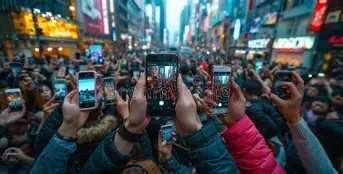
Every generation is tested. +++ Some are tested by war. +++ Some by economic hardship. +++ Some by political upheaval.
Our generation may be tested by something altogether subtler: whether we possess the discipline to preserve our humanity amidst technologies capable of consuming our attention, fragmenting our communities and quietly redefining what it means to live together.
The verdict has not yet been written. +++ But it soon will be.
Our children and grandchildren will inherit not only the devices we create, but also the habits we cultivate and the values we choose to defend. They will ask whether we recognised the dangers that accompanied unprecedented technological power, and whether we acted with foresight rather than complacency.
May they find that we were the generation that rediscovered an ancient truth—that no machine, however ingenious, can replace the warmth of a family gathered in conversation; that no algorithm can substitute for wisdom; and that no digital network, however vast, can equal the strength of a society bound together by trust, duty and love.
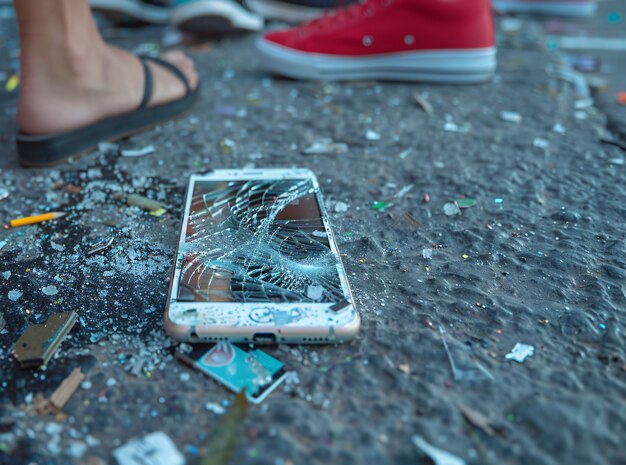
If we remember that, there is hope.
If we forget it, no technological miracle will save us from ourselves.
Thanks to ChatGPT for the help in compiling this post.
